
Hello Galapagos!
Galapagos Islands Day 1
Within 10 minutes of stepping foot on the island of San Christobal I know I want to come back to the Galapagos in the not too distant future.
Picture this: sitting in the back of a ute after being picked up from the airport and looking out the window to see a sea lion walking down along the footpath. Absolutely incredulous (the driver was not) we attempted to photograph and film the sea lion but we needn’t have bothered because within minutes we saw dozens of these curious creatures lying on the pavement—or the middle of the road—snoozing, registering their annoyance when others of their kind came along to challenge their position but not even blinking an eye at the humans who walked by as if they were walking past a sleeping neighbourhood dog.
In one encounter we witness an hour later, two sea lions napping on the benches of a rotunda by the beach are disturbed by an interloper who climbs up over the rocks, ducks through the bars of the structure and proceeds to bark at one of his ‘mates’ until the laze-about in question defers to him and slides off onto the ground. We look on laughing, dumbfounded, and utterly captivated.
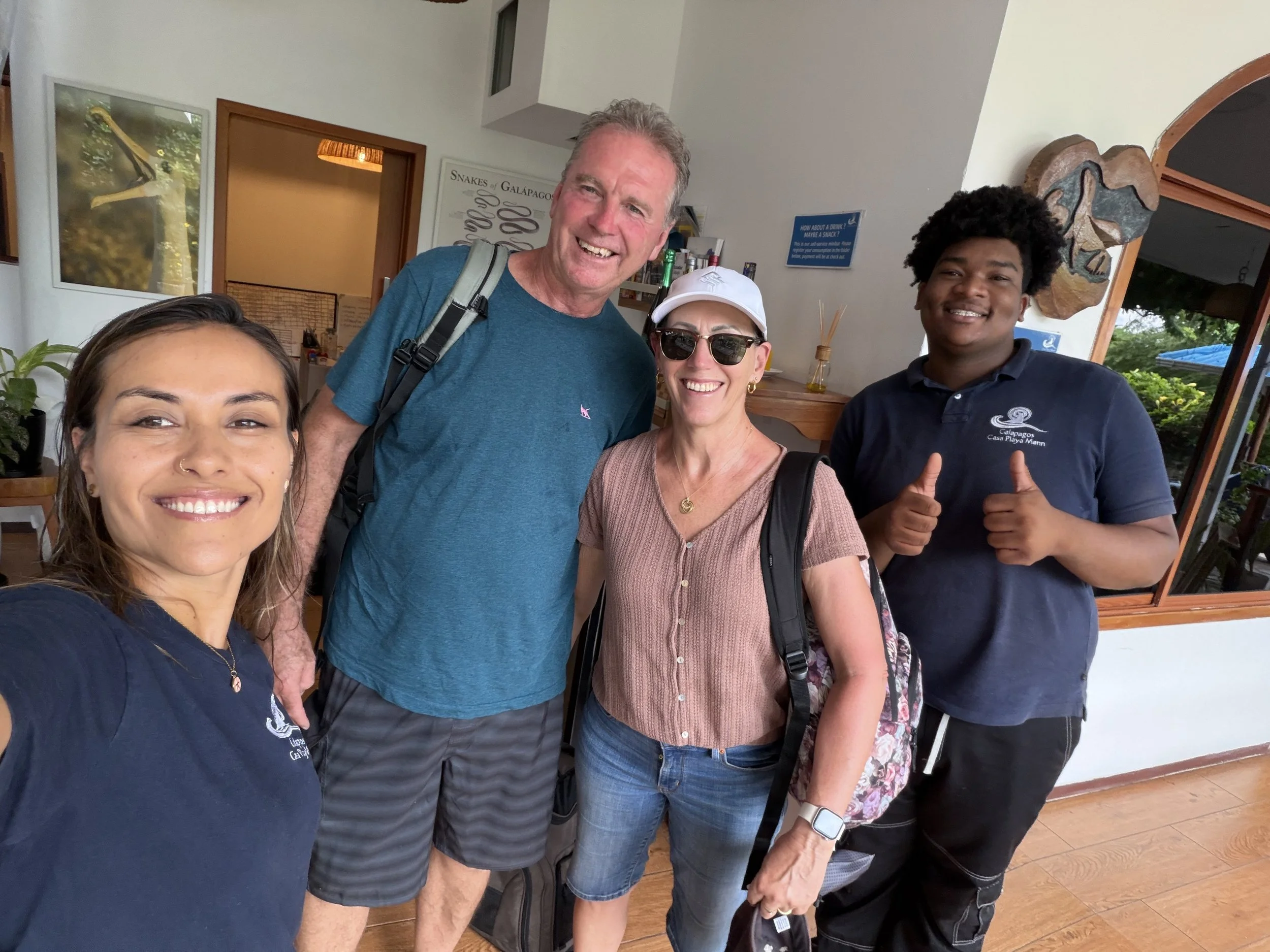
But I digress … the second reason I knew we’d love Galapagos was the hotel we’d booked. Casa Playa Mann is a small place about ten minutes walk out of town, dripping in lush greenery and local tropical flowers, with a paved courtyard, coastal royal blue, white and timber decor and a mother-daughter team (Lu and Lucinda) who exude the friendliness that is characteristic of the locals. On discovering we are only staying one night Lu moves us to an upstairs view so we can enjoy the view and the sunset. She also suggets local walks and eateries which are all absolutely perfect for the short time we have to spend before getting on the boat the following day.
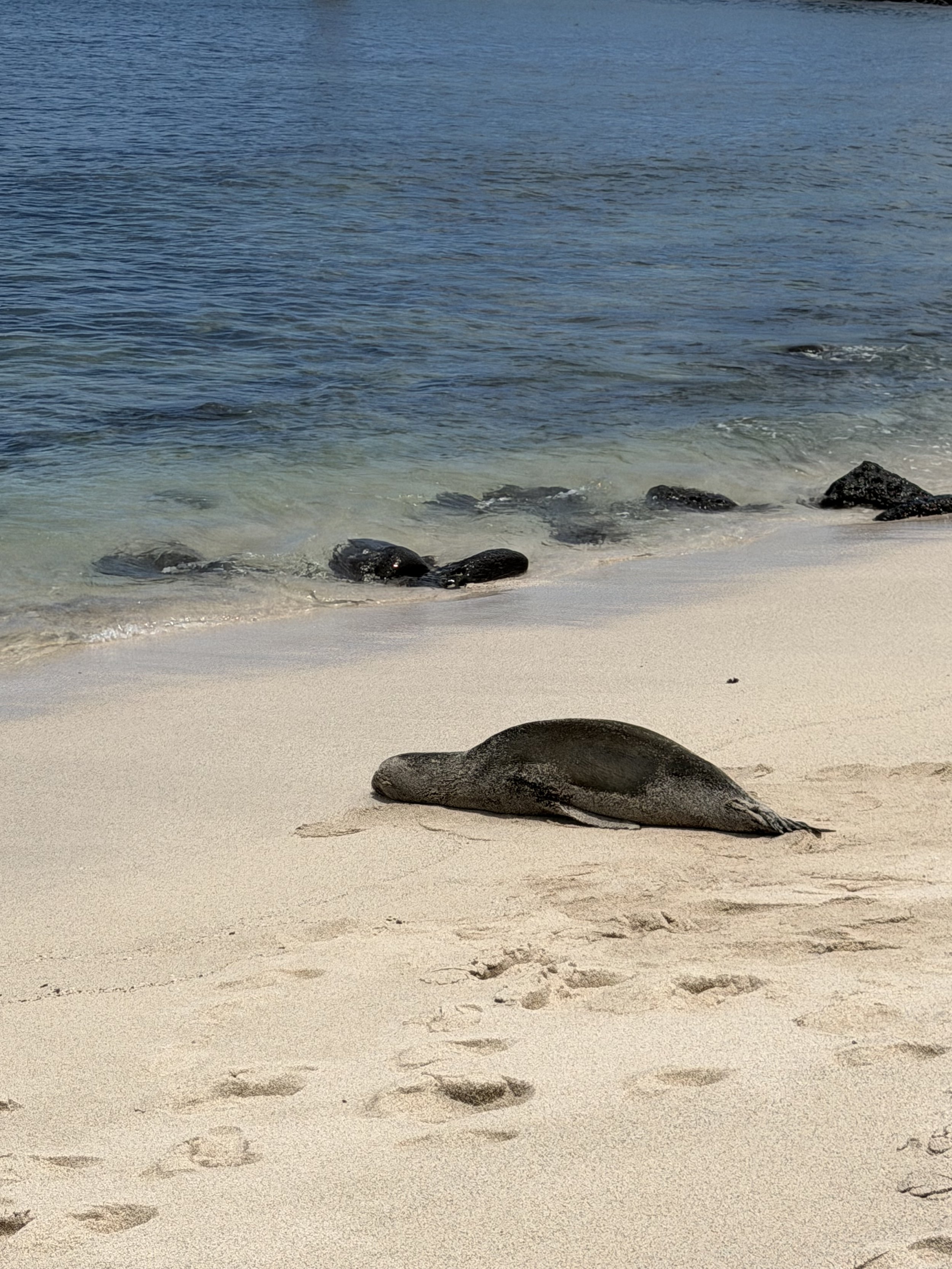
Taking up the first of her suggestions we walk a couple of minutes down the road to a small beach (scene of the above mentioned sea lion wrangling) where we were entertained by a group of sea lions doing what could only be called frolicking on the shore line. In the water the sea lions are preyed on by killer whales and sharks but here on San Christobal, where they’re protected by the national parks authority and the inhabitants who hold them in high regard they have no predators. They swim very close to the humans who enter their domain, only the mothers sometimes barking their disapproval if someone strays too close to one of their babies.
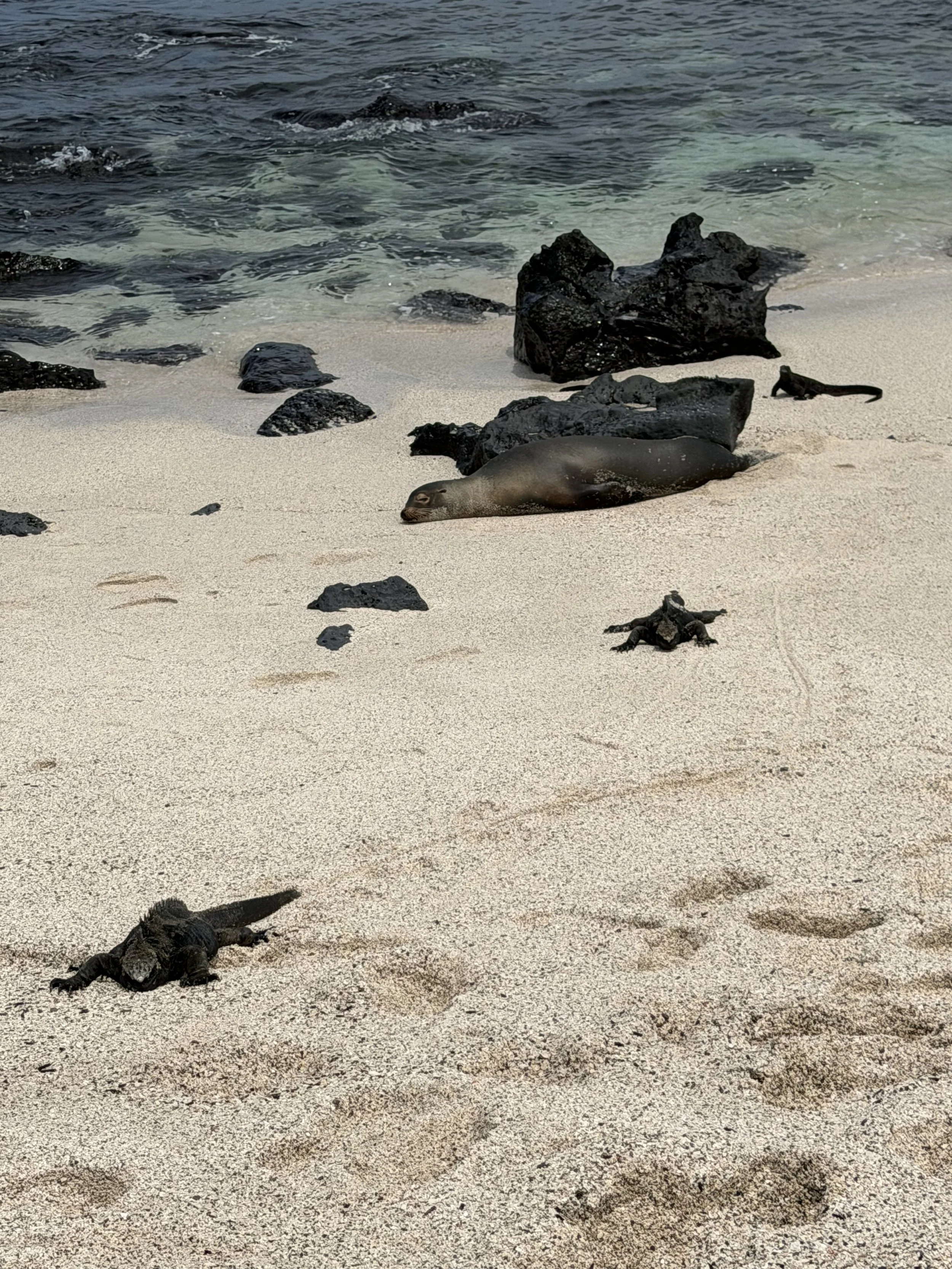
A short walk along a rocky trail brought us to a second beach where black marine iguanas sat like statues on the sand, the pinched faces, spiky manes, webbed feet and whip-like tails making them look truly prehistoric. Like the sea lions lunging nearby, the iguanas have no fear of humans so you can get very close—as long as you keep the mandatory distance of 2 metres, which can be hard sometimes when they encroach on your space. More iguanas nest on the small bushes along the back of the beach, and yet more seals romp in the shallow waters of the cove. I watch them for a good 15 minutes while John explores the rocky point and spots his first Blue Footed Booby as well as the ubiquitous brilliant orange Sally Lightfoot Crabs that don’t bother scuttling away as you approach, just cling to the wet boulders nibbling on weed and algae.
Already on a wildlife high, we spend the afternoon in the company of George, our guide, who gives us a whistle stop tour of the island’s top three spots. First stop was the David Rodriquez Tortoise Breeding Centre where giant tortoises played statues under Poison Apple Trees. These guys barely move, sometimes only a slow blink indicating they’re actually real and not some whimsical garden ornament planted by mother nature to keep you guessing. One group is a little more animated, munching on the leftovers of some Elephant Ear stalks they’d been fed earlier. We also get to see some babies in the nursery where they’re taken after hatching so they’re not eaten by rats! Their shells are soft for the first year or two, making them perfect fodder for the nasty rodents who have been introduced at some point in time and have impacted tortoise numbers. As did the early explorers and travellers who included them on their dinner menu. After a couple of decades of this breeding program tortoises are being reintroduced into their natural habitat at around five years of age which is a fantastic turnaround.
Next we hike for a couple of K’s to Port Cino, or Little Port which turns out to be a gorgeous bay where we would have liked to take a dip if only George had told us there was no swimming on the tour! Frustrating as this iss, having lost half our body-weight in sweat as we slogged along the trail, there and back, we do get to see more seals and take in the breath-taking views.
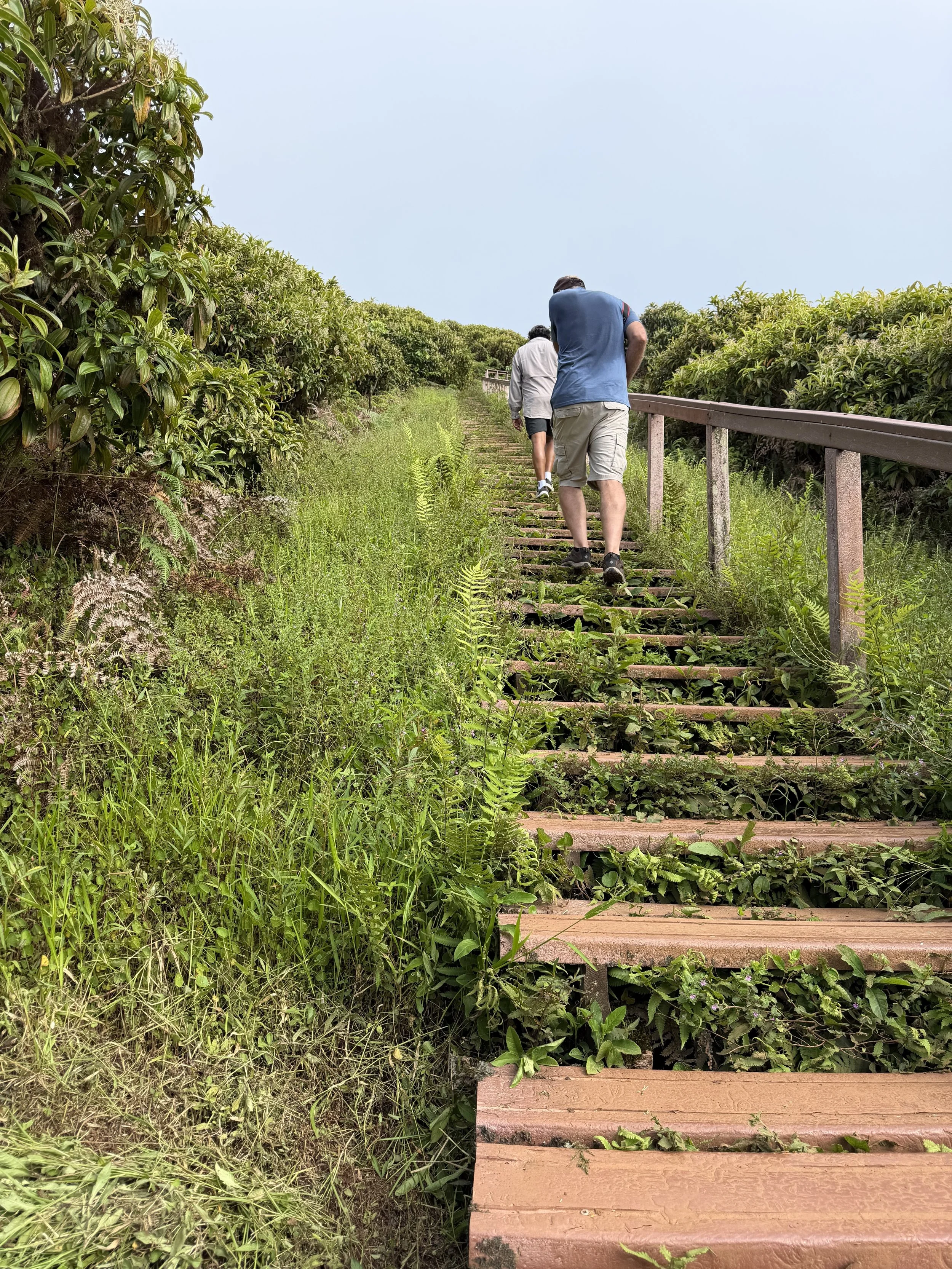
Up we go!
Just when I think I can’t get any hotter or sweatier, George drives us to the volcanic Crater Lake which involves more walking, this time up a steep incline which luckily has a walkway and steps. Tiny lemon-winged butterflies flit across our path while huge black Carpenter Bees did their thing in the flowering bushes fringing the trail. Taking a rest when we reach the top we watch a couple of frigate birds stretch their giganitic wings, dip down to drink from the large pond of freshwater and soar away again.
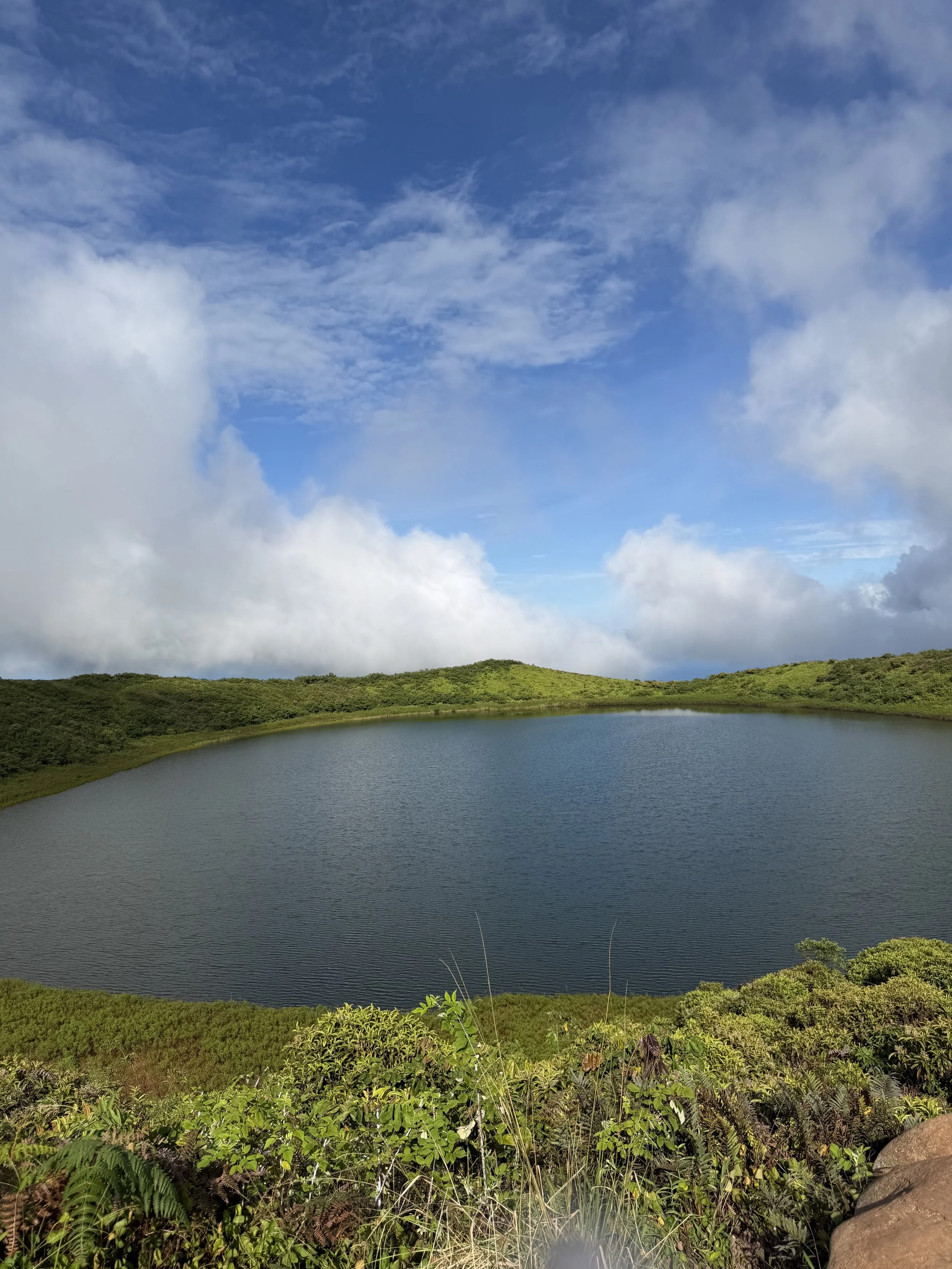
The view was worth it - kind of.
Hot - and not in a good way!
On the way home we stop by the pier at the edge of town to watch the colony of local Sea Lions doing it tough on the rocks. More crabs and a Blue Footed Booby up close and then it’s back to chill out before dinner. Lu’s restaurant recommendation could not have been better: washing down tender char-grilled octopus with an ice-cold local beer was the perfect way to end this wonderful day, all while being entertained by the nearby Sea Lions who take up residence in the middle of the road, forcing local drivers and scooter riders to veer around them or even make a U-turn.
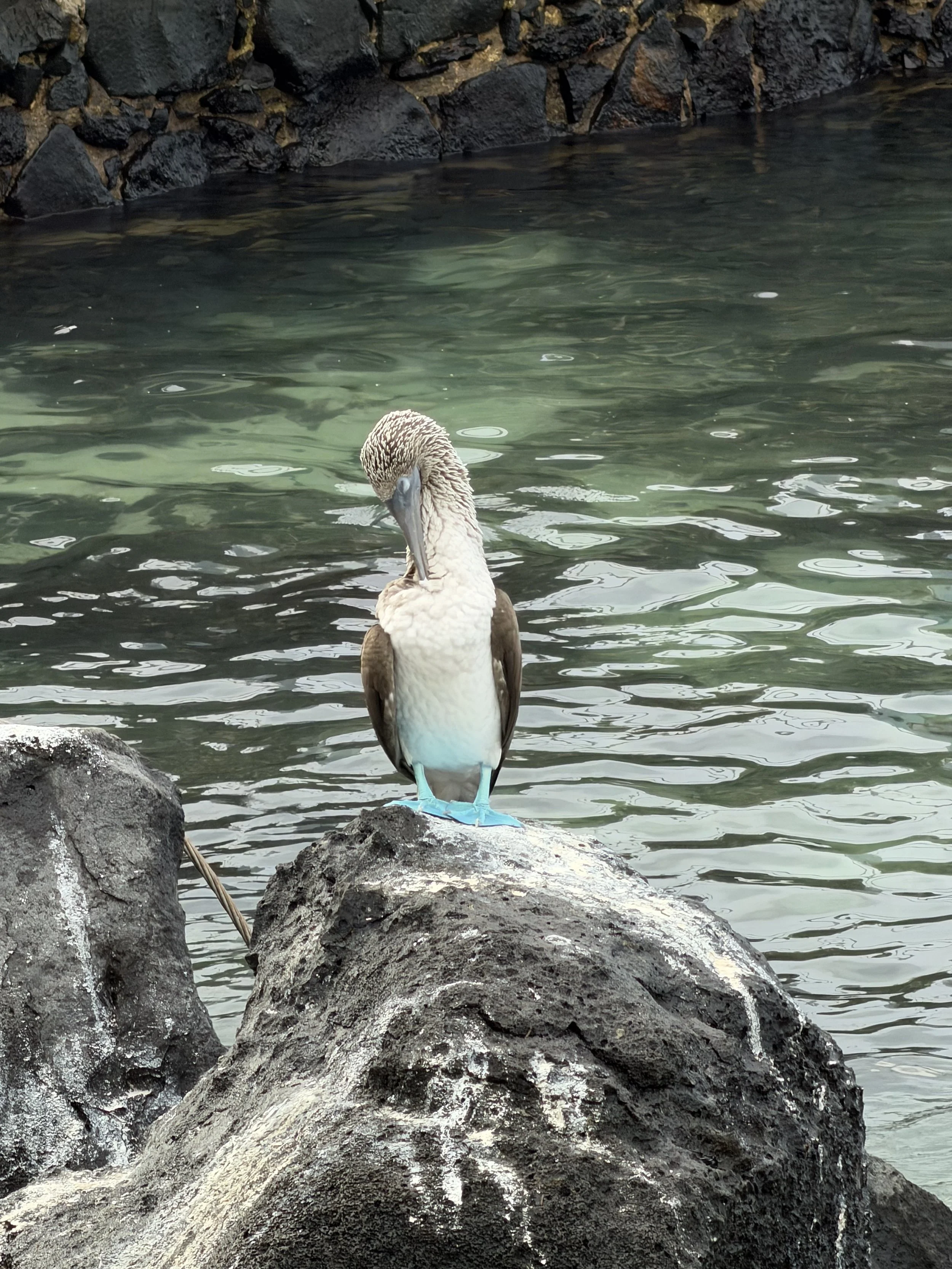
The aptly named, Blue Footed Booby
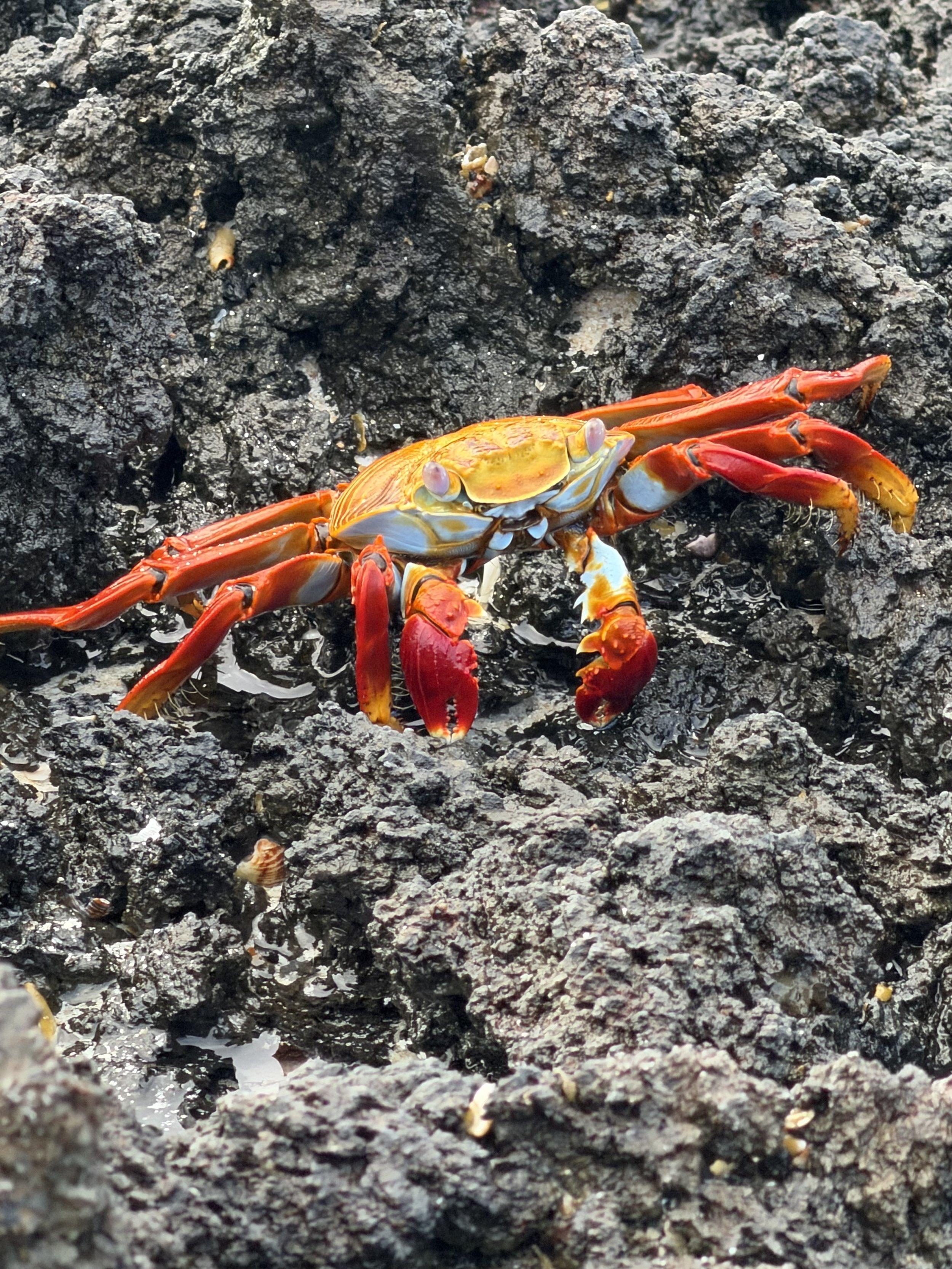
Well, hello there!
We fall asleep to the rolling of waves and the intermittent coughs of Sea Lions who truly are animal royalty on San Christobal.
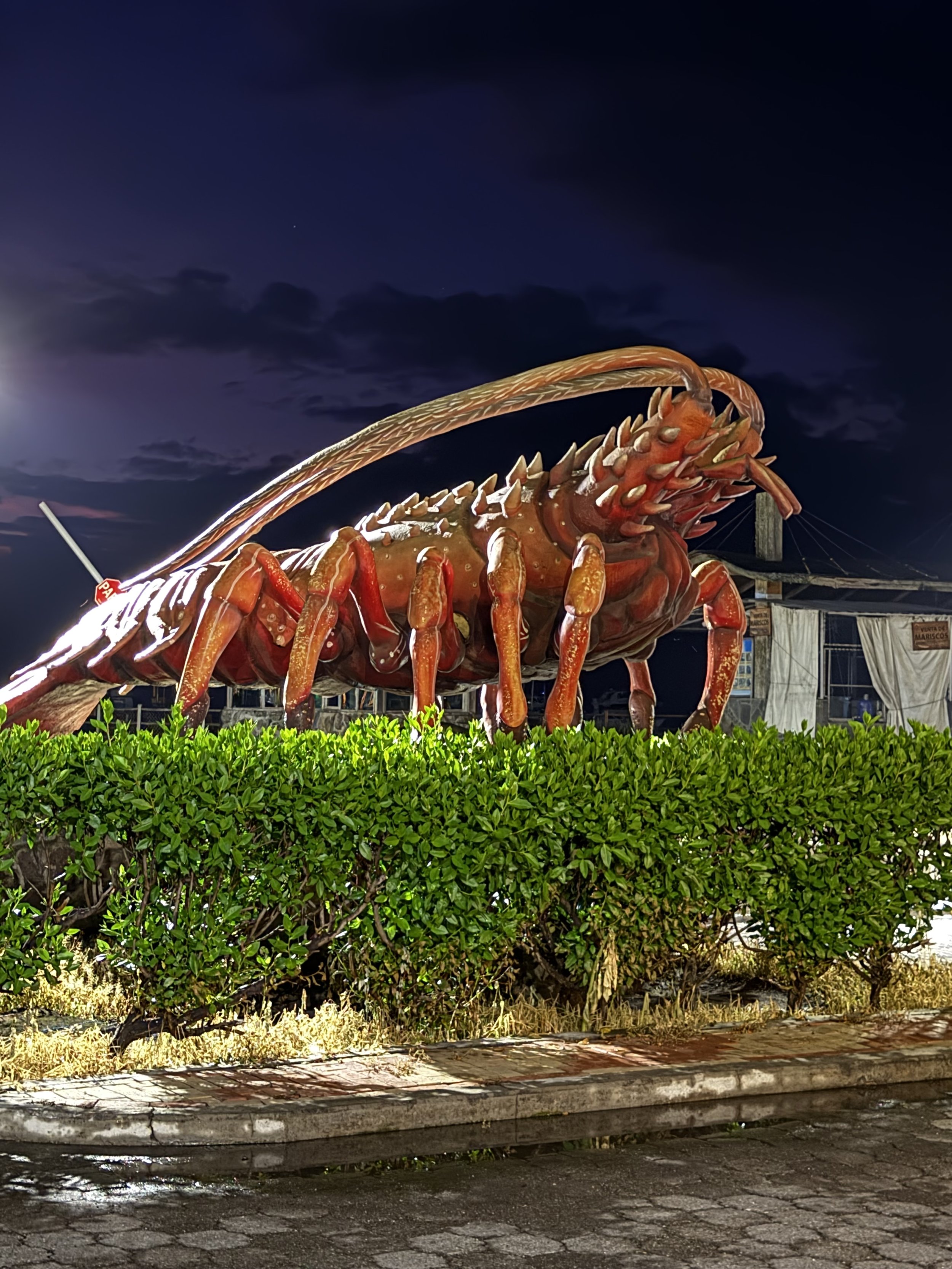
Cruising, Day 2
Off we go again! This time on a much smaller boat that holds only 16 people. We’re doing a tour of the main Galapagos Islands, leaving the boat after 5 days to head home.
We arrive early at the pier and luck out when one of the crew members offers us a ride out to the boat. Grey clouds hover and the heavens open just as we step foot on Calypso, the cruiser that will be home for the next 5 days. Over the next couple of hours our fellow passengers arrive, running in age from thirty-somethings to septuagenarians, from the USA, Canada and Australia they’re a friendly bunch and I’m already feeling more comfortable in this smaller group environment that I did on the larger cruise ship.
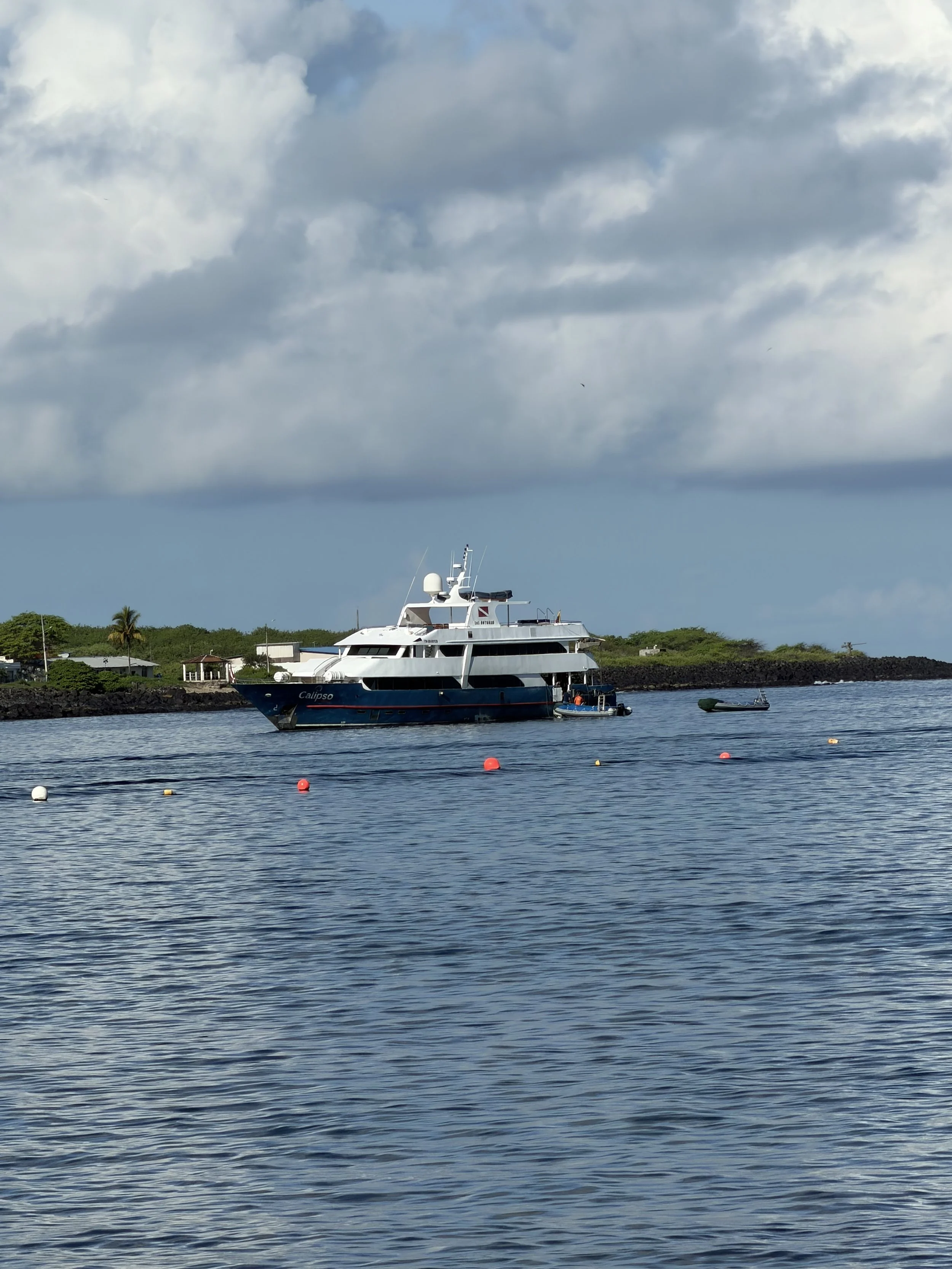
We’re briefed by our tour guide, Milton, before heading north to Witch Hill where we moor, climb into pangas (the small inflatables they call Zodiacs in Antarctica) and make for the shore.
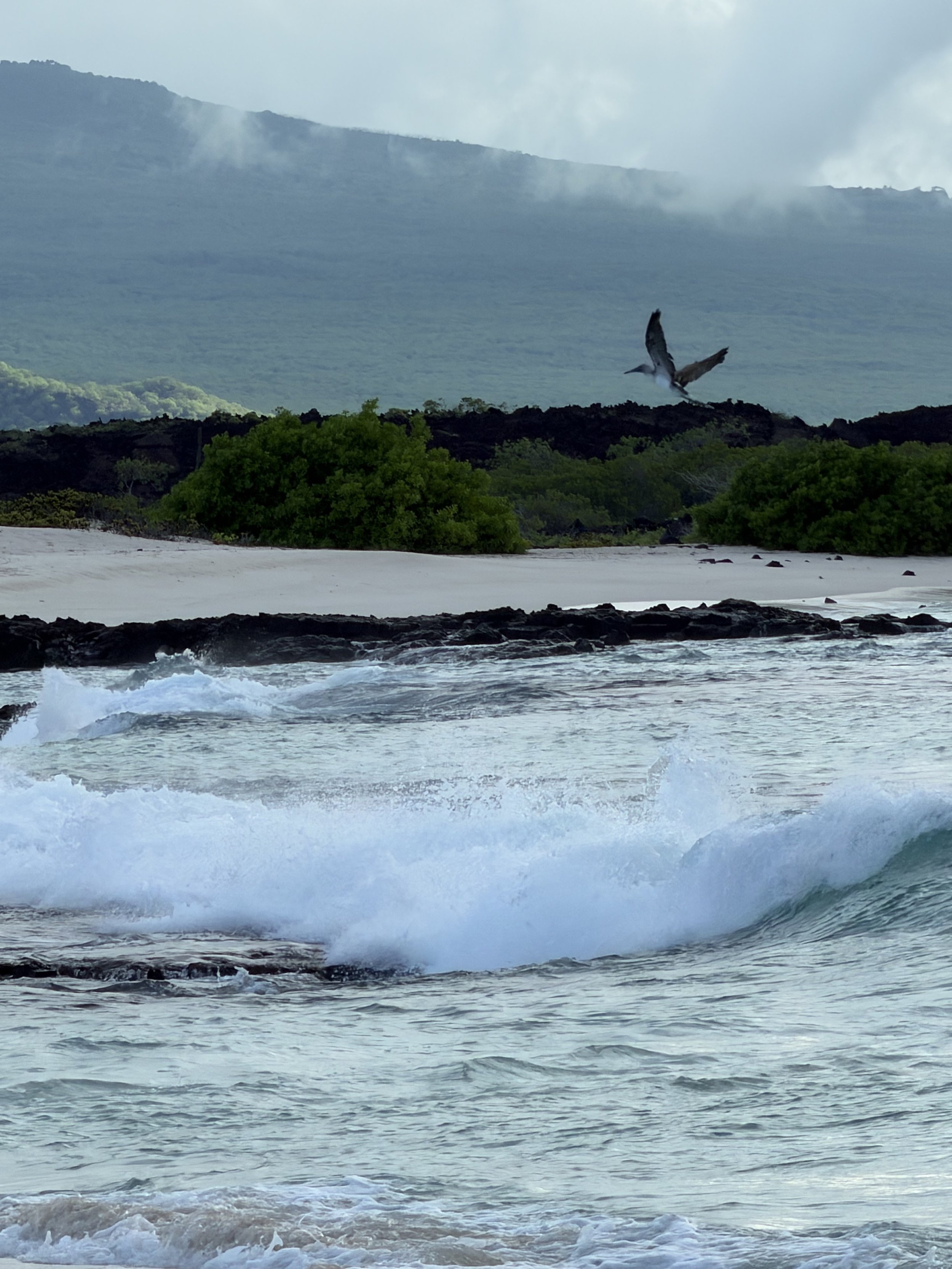
The bird life is stunning: Boobies dip and soar, eyeing off fish beneath the surface, before torpedoing head first into the sea. We watch this over and over again, marveling at their speed and accuracy, gob-smacked by the elegant span of their wings and the proficiency of their vision. A walk along the beach takes us past more lazing sea lions, even more oblivious to our presence than the ones we’ve seen previously, marine iguanas and the ever-entertaining crabs.
Back on the boat we share stories over a deliciously casual buffet meal and I’m reminded of one of the other joys of travel: meeting people who are different from yourself but who share the same love of nature and the world. Despite our differences, social, geographical and political, we’re all human beings learning about and making sense of the world, collecting snapshots both real and imagined.
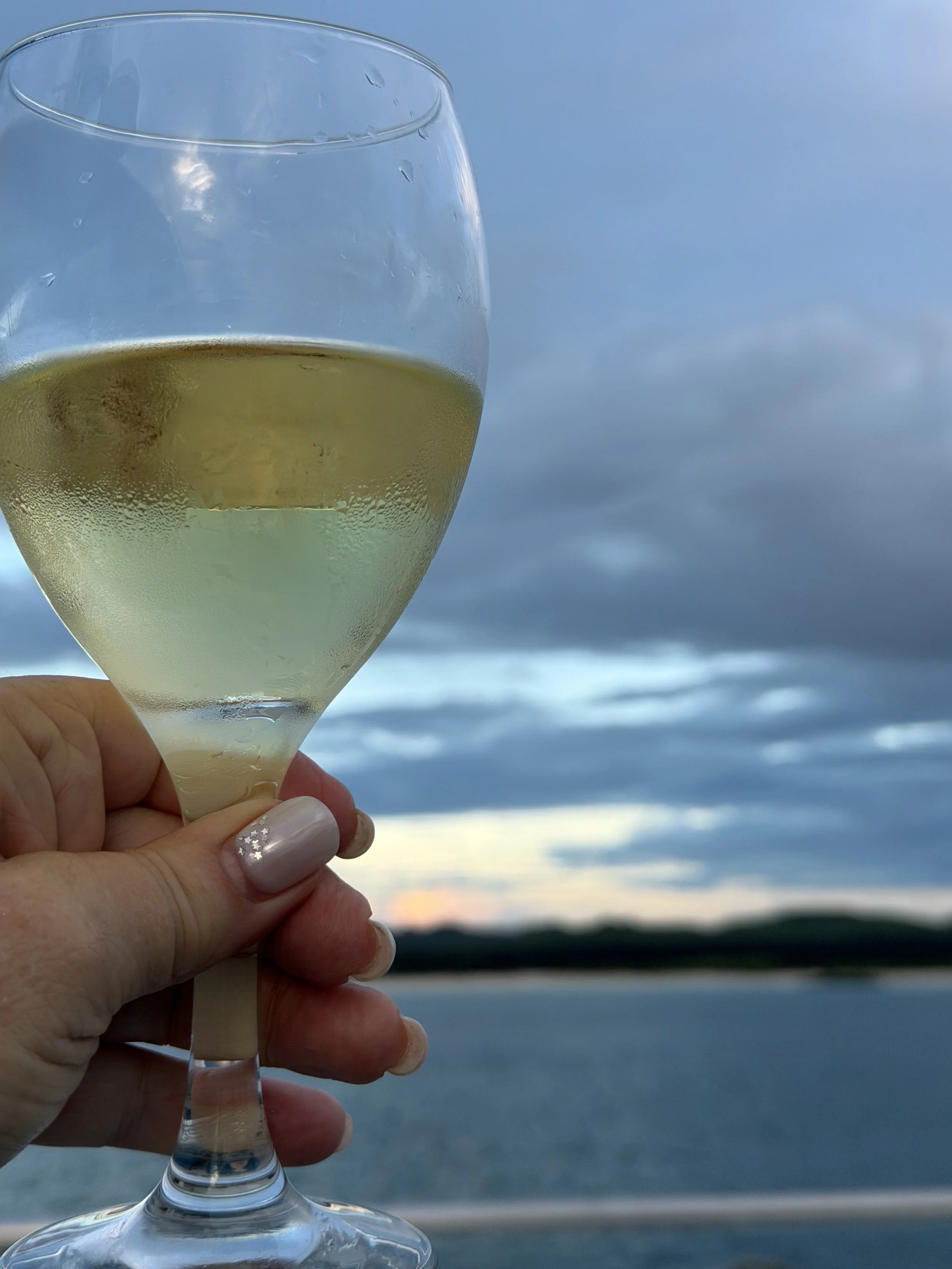
Once again I feel lucky to be here in this World Heritage location amongst like-minded people trying as hard as we can to operate by the traveller’s mantra in this part of the world, Take Only Memories, Leave Only Footprints.